

All news

When the High North Finally Opens Its Gates

For the first time since the creation of the Vendée Arctique – Les Sables d’Olonne, the IMOCA fleet reached the Arctic Circle. A symbolic frontier that neither of the first two editions had managed to cross. An invisible line drawn at 66° North, opening a new chapter in the history of offshore racing. As in mountaineering, reaching a summit never depends solely on those attempting the ascent. The conditions must also agree to open the way. Everest can only be climbed when the weather grants a suitable window. The Arctic Circle obeys the same principle. The sailors may be ready, the boats highly capable and the routes carefully planned, but if the North Atlantic decides to lock the door, nobody gets through. This year, all the ingredients aligned to allow the fleet to reach that mythical latitude.

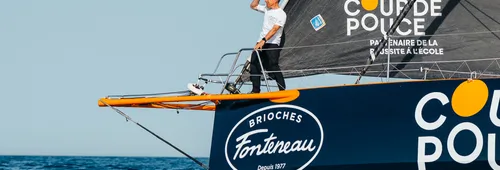
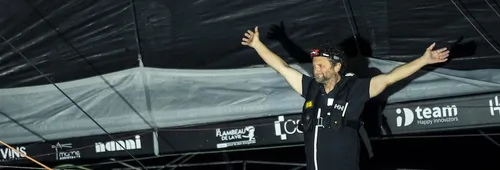
Arnaud Boissières (APRIL Marine - recherche co-partenaires)

A Freer Course, A More Open Game

One of the keys to that success lies in the evolution of the race course itself. In previous editions, competitors were required to round a single waypoint located in the High North. This year, the Race Direction made a different choice: replacing that fixed point with a simple requirement to cross the 66° North latitude. A change that fundamentally altered the equation. “The major difference is having a line to cross rather than a single waypoint to round,” explains Christian Dumard, weather consultant for the Vendée Arctique – Les Sables d’Olonne. “It opens the game considerably. Each skipper can build their own route according to the conditions they want to seek out—or avoid.” In practical terms, sailors were free to choose how they approached the Arctic Circle. Some opted for more westerly routes, while others chose more direct trajectories. A valuable degree of flexibility in a region where the weather often dictates the rules


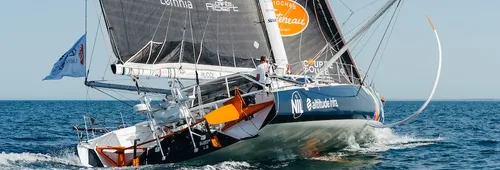
If a waypoint had been positioned near Iceland, as one might naturally have imagined, some days would have been extremely difficult to negotiate because of the strong winds present in the area. Instead, everyone was able to adapt their strategy.

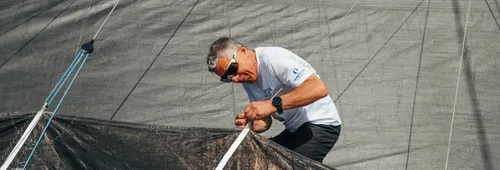
Christian Dumard
Consultant météo de la Vendée Arctique - Les Sables d'Olonne

Three Depressions, But No Closed Door

That said, the High North did not exactly roll out the red carpet. During both the climb towards the Arctic and the return to Les Sables d’Olonne, the sailors had to contend with three successive low-pressure systems, winds sometimes exceeding 35 knots and seas reaching 4.5 metres in places. Nothing extreme for IMOCA yachts designed to race around the world, but more than enough to turn life on board into an exercise in endurance. “This route remains challenging because it naturally crosses the path of North Atlantic depressions,” Christian Dumard points out. “You have to pass through at the right moment. The systems cannot be too deep and their timing has to align with that of the fleet.” The key difference this year was that no major weather system arrived to completely shut the door. “The scenario that would really have complicated matters would have been a deeper depression blocking a large section of the North Atlantic. In that case, the passage could have become extremely difficult—or even impossible.” The sailors therefore encountered demanding and at times powerful conditions, but never anything severe enough to jeopardise the race’s northern objective.

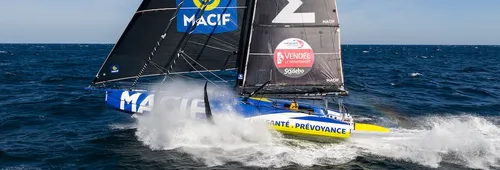
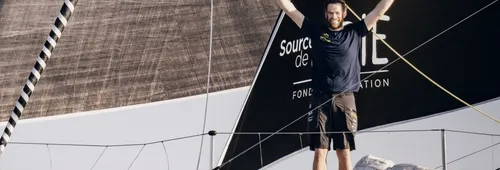
Sam Goodchild - MACIF Santé Prévoyance

The Right Season, At the Right Time

The calendar also played an important role. June remains the most favourable period for venturing this far north. The days are exceptionally long. Beyond the Arctic Circle, the sun barely dips below the horizon. A near-continuous daylight that blurs the very notion of night. “It is clearly the best season to head up there,” says Christian Dumard. “The days are very long and weather systems are generally less active than at other times of the year.” Even during the most favorable season, however, nothing is guaranteed. “A start one week earlier or one week later might have produced a very different story,” he notes. Much like mountaineers patiently waiting for the right weather window to attempt a summit, the organisers and sailors benefited this year from a favorable alignment of circumstances. Enough wind to keep the boats moving. Enough sea state to remind the sailors where they were. But never the kind of meteorological blockade capable of shutting down the road north altogether. In the end, all eight sailors who completed this third edition reached the 66° North latitude that had eluded the first two editions. Beyond the rankings, that may well represent one of the defining achievements of the 2026 Vendée Arctique. The Arctic Circle became something more than a line drawn on a chart. It became a reality experienced, confronted and shared by the sailors themselves. The High North remains a territory that can never truly be conquered. It must be earned, when the elements decide—for a time—to allow passage.


Share this article

Latest news