


A Brand-New Course Format
Nine skippers lined up on the start line. Although the fleet was compact, it featured a diverse mix of experience: four sailors had already completed the Vendée Globe, while five were taking on the demands of solo IMOCA racing for the first time. Three women competed, representing four different nationalities.
This edition introduced a major innovation with a free-route course, allowing skippers complete freedom to choose where they would cross the Arctic Circle. The new format placed strategic decision-making, weather routing and seamanship firmly back at the heart of the race.
Another significant development was the introduction of multiple marine mammal protection zones, underlining the organisers' commitment to adapting the race to today's environmental challenges while preserving its sporting integrity.
Eight Days of Intense Racing
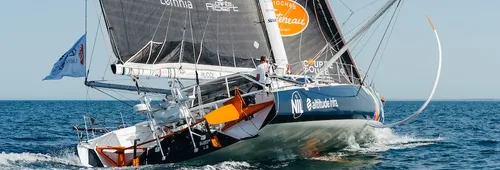
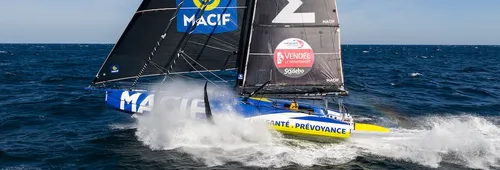
On the water, the race produced a gripping contest packed with twists and tactical swings. Sam Goodchild (Macif Santé Prévoyance) led for much of the race and seemed destined for victory. But in the closing miles, Ambrogio Beccaria (Allagrande Mapei) turned the tables to claim victory after 3,190 nautical miles of relentless racing.
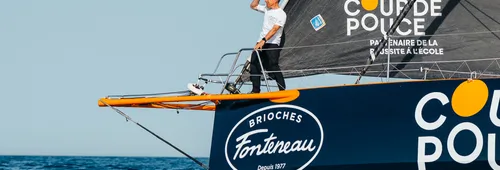
Behind them, Violette Dorange (Initiatives Cœur) completed the podium, finishing just a few hours ahead of Élodie Bonafous (Association Petits Princes – Queguiner) and Francesca Clapcich (11th Hour Racing). Nicolas d'Estais (Café Joyeux), Arnaud Boissières (April Marine) and Manuel Cousin (Coup de Pouce) all made it back to Les Sables d'Olonne after several demanding days at sea, while Corentin Horeau (MACSF) was forced to retire following technical damage.
Beyond the results, every skipper came away with invaluable experience. For some, the Vendée Arctique marked their first experience of solo IMOCA racing. For others, it provided an ideal opportunity to test their boat, validate technical choices and refine their approach ahead of the next major offshore challenges.
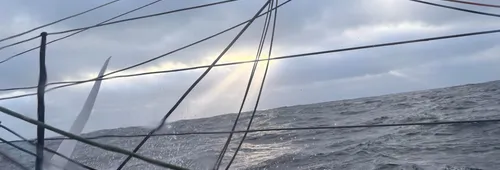
Perhaps the skippers themselves summed it up best. Sam Goodchild (Macif Santé Prévoyance) described the race as "a condensed version of the Vendée Globe." Élodie Bonafous (Association Petits Princes – Queguiner) captured the experience in a single sentence: "We experienced everything: strong winds, calms, rough seas, cold..."
Nine Days of Celebration in Les Sables d'Olonne
For nine days, the Vendée Arctique Race Village took over the Vendée Globe Esplanade. Pontoon visits, skipper meet-and-greets, autograph sessions, exhibitions and family activities immersed visitors in the worlds of offshore racing and the Arctic, notably through Florian Ledoux's exhibition.
True to the spirit of the Vendée's offshore racing events — free and open to everyone — the Race Village welcomed around 50,000 visitors over the course of nine days. The opening drone display, the race start, the finishes and countless opportunities for skippers and fans to meet created memorable moments throughout the event.
The race partners also played a key role in bringing the Race Village to life. Sodebo, Brioches Fonteneau and Hyundai welcomed thousands of visitors throughout the event from their exhibition stands. Vendée artist Julien Vrignaud showcased his work and created the trophies presented to the skippers, while Virtual Regatta gave everyone the opportunity to take the start themselves through virtual racing.
Scientific outreach was also a key feature of the Race Village, with Ifremer and the French Polar Institute (IPEV) helping visitors better understand the challenges of polar research. Finally, Radio France and Ouest-France helped extend the reach of the event well beyond Les Sables d'Olonne.
A Race That Reached Far Beyond Les Sables d'Olonne
The race attracted a wide audience far beyond the pontoons. The official website recorded nearly 820,000 visits, while race content generated more than 21 million views across social media. The event also received extensive media coverage in France and internationally, with the start broadcast around the world by 28 television channels.
These figures reflect the growing appeal of the race and confirm its place as a key milestone on the road to the Vendée Globe 2028.