


The technical characteristics of an IMOCA
IMOCAs are defined by a precise set of specifications:
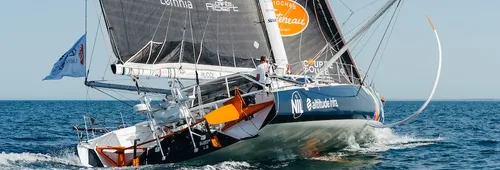
- Maximum length: 18.28 metres (60 feet)
- Maximum beam: 4.50 metres
- Mast height: under 29 metres
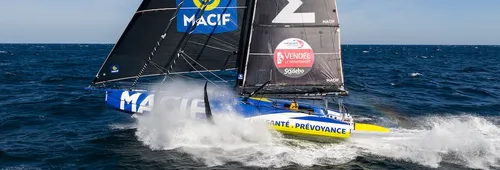
These yachts can reach top speeds of 40 knots (75 km/h). During the Vendée Globe 2024, the 24-hour distance record was set at 615.33 nautical miles, or 1,139 km. The fastest boats completed the round-the-world race at an average speed of 17 knots (31 km/h), compared with 8 knots for the first-generation boats in 1986.
What is the history of the IMOCA class?
The IMOCA class emerged in 1986 during the BOC Challenge, a solo round-the-world race with stopovers. From this first generation onwards, the boats already featured the key characteristics still seen today: significant beam and waterline length.
Since then, the class has continued to evolve technically, notably thanks to the rise of onboard computing systems and the development of autopilots. Cockpits, once open, are now fully enclosed to protect the manoeuvring area.
Which races are contested in IMOCA?
The IMOCA class features three major events:
- The Vendée Globe, a solo non-stop round-the-world race without assistance (every four years)
- The Vendée Arctique, a solo race whose next edition is scheduled to start on 7 June
- The New York Vendée, whose next edition will take place in 2028
What are foils on an IMOCA?
Foils are lifting surfaces attached to each side of the hull. Their role is to lift the hull out of the water, reducing hydrodynamic drag and dramatically increasing speed. Thanks to foils, IMOCAs can literally “fly” above the surface. This technology represents the greatest revolution in the class since its creation.
Foils first appeared in the early 2000s. Their adoption has been gradual but massive :
- 6 foilers in the Vendée Globe 2016
- 19 foilers in the Vendée Globe 2020
- 30 foilers in the Vendée Globe 2024
The class rule gives teams considerable freedom in foil shape design, making it a constant field of innovation.
What is the environmental dimension of the IMOCA class?
The IMOCA class increasingly integrates environmental requirements into its class rules.
As early as 2021, the use of bio-sourced materials was encouraged, and teams were required to carry at least one sail manufactured from alternative or recyclable materials.
In 2024, a new rule required all teams building a new boat to reduce their environmental impact by 15%, with the objective of reducing the use of carbon fibre in moulds and minimising waste during foil manufacturing.
Is the IMOCA fleet multi-generational?
Yes. Boats from previous generations continue to compete at the highest level, demonstrating their robustness and longevity. The Vendée Arctique provides a concrete example, with a fleet bringing together:
- 2012 : the IMOCA with which François Gabart won the Vendée Globe 2012-2013, now sailed by Nicolas d’Estais (Café Joyeux)
- 2015 : the monohull designed for Alex Thomson, now managed by Arnaud Boissières (April Marine)
- 2022 : MACIF Santé Prévoyance, Initiatives-Cœur, 11th Hour, Allagrande Mapei and MACSF
- 2024 : Association Petit Princes-Quéguiner, the only boat launched after the Vendée Globe 2024
Nine new IMOCA construction projects have already been launched for the next cycle, confirming the dynamism of the class.
FAQ: everything you need to know about IMOCAs
What distinguishes an IMOCA from other types of yachts?
IMOCAs stand out thanks to their strict class rule (maximum length of 18.28 m, mast under 29 m), their design for solo sailing and their ability to withstand the most extreme conditions.
Unlike most racing yachts, they must be capable of righting themselves after a capsize without external assistance. Their use of foils, allowing the hull to “fly” above the water and reach 40 knots, places them in a category of their own among racing monohulls.
How do you prepare for an IMOCA race?
Preparing for an IMOCA race combines intensive physical training, mastery of onboard systems (autopilot, onboard computing) and in-depth weather knowledge. Skippers also spend considerable time optimising their boats with their technical teams, particularly regarding foil design and setup. Mental resilience is equally decisive, as races can last several weeks solo.
Which boats are famous in the IMOCA class?
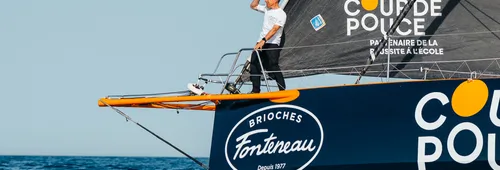
Several IMOCAs have become legends of offshore racing. The boat with which François Gabart won the Vendée Globe 2012-2013 still races today raced by Nicolas d’Estais. Armel Le Cléac’h’s IMOCA, runner-up in that same edition, now sails under the name Coup de Pouce with Manuel Cousin.