

All news

The end of the course looks uncertain

As Manu Cousin (Coup de Pouce) crossed the Arctic Circle in turn during the night, at around 01:00, symbolically completing the fleet’s collective transition onto the return leg, the leading boats have never appeared more divided in their courses. Nor has the finish line ever seemed so difficult to predict. Sam Goodchild (MACIF Santé Prévoyance) is now sailing in the Celtic Sea after passing through St George’s Channel. Elodie Bonafous (Association Petits Princes – Quéguiner) continues her route through the Irish Sea. Further west, Ambrogio Beccaria (Allagrande Mapei), Violette Dorange (Initiatives-Cœur) and Francesca Clapcich (11th Hour Racing) are making their way towards the Fastnet. At first glance, the major strategic choices around the Emerald Isle are finally beginning to show their consequences. And yet, just as the race is becoming easier to read, a new unknown is already entering the equation. Between Brittany and Vendée, a vast area of light winds could reshuffle the cards and net gains to decisions that some had assumed would carry a heavy price. In short: the cards are on the table. The explanations behind the final outcome, or....maybe not.

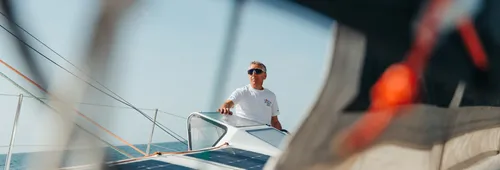
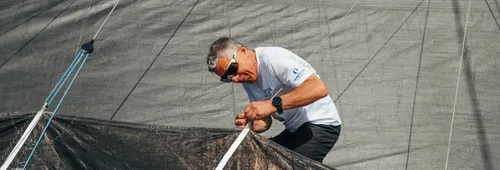
Atmosphere aboard the Imoca 11TH Hour Racing, skippered by Francesca Clapcich during the Vendée Arctique 2026 - at sea on 08/06/2026
Ambiance à bord de l'Imoca 11TH Hour Racing, skippé par Francesca Clapcich lors de la Vendée Arctique 2026 – en mer le 08/06/2026

What Was Supposed to Be COSTLY

Since yesterday, Ireland has looked like the decisive element of this Vendée Arctique. To head south, the leaders had to make a choice. On one side lay the demanding passages through the North Channel and St George’s Channel. On the other, a wide detour around the western side of Ireland. Two interpretations of the same race. Two different approaches to risk. For those who chose the second option, the objective was not necessarily to gain miles but rather to avoid a notoriously difficult sequence involving coastal effects, tidal currents, shipping traffic and numerous navigational traps. A prudent decision more than an aggressive gamble. On paper, the verdict seemed obvious. The detour looked a little like taking country roads on a holiday journey: more distance and, theoretically, lost time at the finish. Then the weather models began telling a different story. With each successive forecast update, that option has regained credibility. Without necessarily becoming the winning route, it may ultimately prove far less costly than initially expected. The reason lies in an increasingly uncertain endgame. Between Brittany and Vendée, the extensive light-wind zone expected in the coming days could compress the fleet and offer a second opportunity to those who willingly surrendered ground earlier in the race. Currently slowed by a ridge of high pressure off pictureque Dingle Bay, Ambrogio Beccaria remains cautious. 


My option was defensive from the beginning. Could it become offensive? Maybe. But I’m not expecting a miracle. I think the boats in front will remain in front. I’ve stopped paying too much attention to what everyone else is doing. Now I’m mainly focused on my own race and on doing things properly.

Ambrogio Beccaria
ALLAGRANDE MAPEI

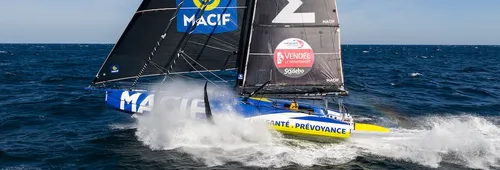
Atmosphere aboard the Imoca Macif Santé Prévoyance, skippered by Sam Goodchild during the Vendée Arctique 2026 - at sea on 08/06/2026

UAn Impossible Finish Time to Predict

The ETAs continue to drift. As recently as Friday, Sam Goodchild appeared capable of reaching Les Sables d’Olonne during the early hours of Monday morning. Now, the leading competitors are expected closer to the end of the day. Even that estimate, however, should be viewed more as a trend than a forecast. At this stage, it is probably wiser to consult it like a horoscope than carve it in stone. The closer the fleet gets to Vendée, the more uncertain the timing paradoxically becomes. The culprit is that same area of light winds forecast in the Bay of Biscay, capable on its own of completely reshaping the race in its final miles. In such circumstances, one or two knots more—or less—can change everything. The routing models are now telling very different stories. Some predict only one or two hours between Sam Goodchild and Elodie Bonafous, with little more separating Ambrogio Beccaria, Violette Dorange and Francesca Clapcich. Others paint far more stretched-out scenarios. All of them, however, reach the same conclusion: Nobody is currently in a position to seriously refine the timing of the finish. Elodie Bonafous is fully aware of the situation. “Everything will depend on our timing. If we manage to get through before the light winds arrive, great. If they catch us, the gaps could close.” Before adding with a smile: “In an ideal world, the light winds would slow down the boats in front without slowing me down! But it never works like that, so my objective is simply to keep resting and stay lucid. I have the feeling this race is going to be decided right at the end.”

Confidence and Humility

Perhaps nobody has summed up the situation better than Nicolas d'Estais (Café Joyeux). After several demanding days in the higher latitudes, a torn sail, a troublesome rudder that caused him problems yesterday off the Faroes and particularly challenging conditions, the skipper reached a conclusion that extends well beyond his own race. “Offshore racing teaches you self-confidence and humility at the same time.” The phrase resonates particularly strongly in the current context. Confidence to trust your analysis, commit to your decisions and stand by them. Humility to accept that a windless bubble, a weather transition or an apparently insignificant detail can overturn hours of careful thinking. Aboard Café Joyeux, however, the sense of wonder remains intact. If anything, it has grown stronger. “I switched my navigation lights back on for the first time in four days and it really meant something to me. It was the first moment when I thought: ‘We’re starting to get closer to home.’ ” Perhaps that is the best definition of this closing phase of the race. Everyone now knows where they are going. As for everything else, the Atlantic still has a few cards left up its sleeve.


Share this article

Latest news