


Corentin Horeau Forced to Retire
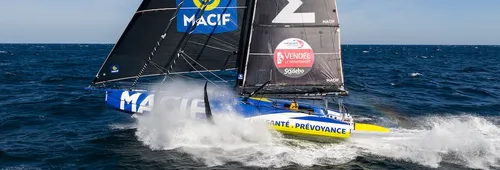
It was undoubtedly the defining moment of the night. Yesterday evening, at around 21:00, while lying second in the fleet, Corentin Horeau suffered damage aboard MACSF. The J3 chainplate, the structural attachment point securing the headsail to the hull, was torn from the deck.
For nearly two hours, the skipper and his technical team explored every possible solution that might allow repairs and a continuation of the race. Given the conditions expected over the coming days and the risk of worsening the damage, the decision was ultimately made to retire. The sailor is currently making his way back to Lorient, his home port. The news inevitably resonated throughout the fleet.
Sam Goodchild, who had been racing alongside the sailor from La Trinité-sur-Mer since the start, did not hide his disappointment. “I’m sad for Coco. It’s tough to see him turning back. He was sailing really well and had made a superb start to the race. Losing a competitor like that is always disappointing. But I’m sure he’ll come back even stronger.” Beyond the emotion, the retirement also serves as a reminder that the Vendée Arctique has entered a phase where even the smallest incident can carry significant consequences.
Sailing Fast, But Not Too Fast
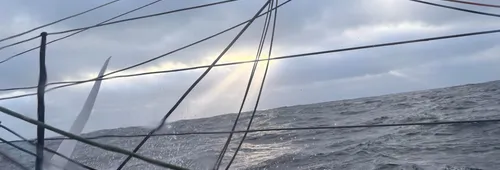
Off the coast of Ireland, the IMOCA fleet is currently navigating the toughest conditions encountered so far in this edition. For the leading boats, the forecast peak in both wind and sea state has now arrived. Sam Goodchild passed through it overnight after rounding southwest Ireland and Dingle Bay at around 04:00. Leading the fleet by nearly fifty nautical miles over Elodie Bonafous (Association Petits Princes – Quéguiner), the Franco-British sailor nevertheless chose to ease off slightly. “For several hours I’ve been slowing down to avoid slamming too hard into the waves,” he explained, while the heavy impacts and violent movements of the boat could be heard in the background of his voice message.
“The objective is to sail fast, but not too fast. We’re trying to eliminate the biggest accelerations and the hardest impacts.” A subtle exercise. “The wind isn’t stable. There are squalls, so I’m staying close to the sheets in order to slow the boat down quickly if necessary. It’s demanding.” On board, priorities are changing as well. In four-metre seas, every movement becomes a delicate operation. “We’re doing less than the bare essentials,” he smiled. “I’m trying to move around as little as possible, make sure I don’t forget to eat and grab sleep whenever I can.” There is some good news, however. “The worst seems to be behind us now. Conditions should gradually ease and settle down.”