

All news

The Final Miles Never Come Easy

After more than nine days battling the North Atlantic, the finish line is finally drawing near for Nico d’Estais. With fewer than 100 miles remaining, the Café Joyeux skipper is expected to complete his Vendée Arctique – Les Sables d’Olonne this Wednesday evening or during the first part of the night. Behind him, Arnaud Boissières (APRIL Marine) has not given up hope of reducing the gap, while Manu Cousin (Coup de Pouce) continues his long upwind passage towards Ireland in 25 to 35 knots of breeze. Three different trajectories, but the same determination: to remain fully engaged in their race until the very end and continue extracting the maximum from every mile sailed.

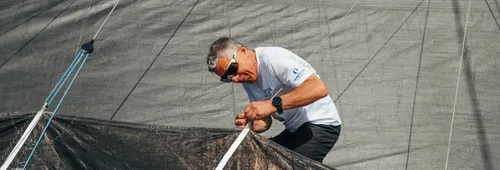
Nico d'Estais (Café Joyeux)
© Martin Kéruzoré

The Final Traps

For days, they have dealt with North Atlantic depressions, gusts exceeding 30 knots and the often demanding seas of the higher latitudes. Since turning south, however, the picture has changed. Following a fast passage through the Celtic Sea and the English Channel, Nico d’Estais and Arnaud Boissières are now entering a very different phase of their race. As they approach Vendée, the wind is fading and positioning has become increasingly important. That southbound leg towards the French coast has nevertheless provided some welcome respite. Relatively flat seas, good boat speed and long periods on the same tack have allowed both sailors to recover after a particularly demanding week. “I took advantage of that period to really recover. It was fairly stable, ideal for resting before reaching the Breton and Vendée coastlines,” explained the Café Joyeux skipper. Aware of the forecast light-air conditions near the finish, Nico d’Estais chose to anticipate the challenge. He opted to remain as close as possible to the shoreline in the hope of benefiting from local thermal effects. On Wednesday morning, that strategy led him to pass inside Belle-Île-en-Mer. “The challenge now is simply to find enough wind to reach Les Sables d’Olonne. It looks set to be quite a tricky finish. Fortunately, my boat is fairly comfortable in these conditions.” The strategy makes sense. But it guarantees nothing. Already slowed by the light airs, the sailor has seen his advantage gradually shrink. As a natural consequence, the gaps are compressing. “I had managed to extend the gap a little, but Cali has come back. We’re not in exactly the same place and we’re not experiencing the same wind. I can clearly see my lead shrinking as I slow down, but he’ll eventually enter this area as well. Whatever happens, I’m staying focused right to the finish.” Further behind, Arnaud Boissières is indeed still benefiting from slightly more pressure and continues to chip away at the deficit. That situation, however, is unlikely to last. Because while the route now appears easier to read, the final stretch still retains its share of uncertainty. The APRIL Marine skipper therefore remains particularly attentive to the transitions awaiting him over the coming hours. “The wind should gradually free and we’ll probably have to gybe a few times, but the overall trend remains fairly favourable.”

A Bigger Step Than Any Before

As the miles tick by, the first assessments are beginning to emerge. For Nico d’Estais, this Vendée Arctique represents far more than another line on a racing résumé. It marks an important milestone on his journey towards the Vendée Globe.


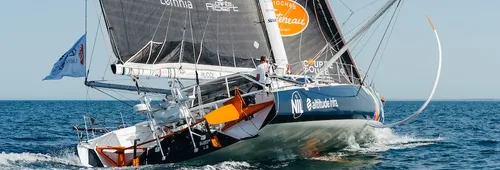
This race represents a major step in my preparation. A bigger step than any of the previous ones. Simply reaching the finish gives me tremendous confidence for what comes next.

Nico D'Estais
Café Joyeux

The Café Joyeux skipper takes as much satisfaction from what he has learned as from the result itself. “There are several things I achieved during this race that I would have thought impossible only a month ago.” But that growing confidence comes with an undiminished respect for both the ocean and the machines they sail. “When the boat ended up knocked down and I had to find a way to get going again, it reminded me just how small we remain compared with these boats and the sea.” For Arnaud Boissières, the feeling is remarkably similar. Beyond the numbers, it is the experience accumulated that matters most. “I’m genuinely happy to have been up there, to have crossed that famous Arctic Circle. I tried things, took different options and learned more about my boat.” The skipper from Les Sables d’Olonne also leaves with a deeper understanding of his IMOCA. “Sometimes I feel as though the boat has more capabilities than its skipper. Conditions that I find difficult seem perfectly comfortable for the boat. That’s reassuring for the future and makes me want to continue exploring its potential.” Both sailors return from the High North with more than just miles in the logbook: renewed confidence, valuable reference points and experiences that will matter in the challenges ahead.

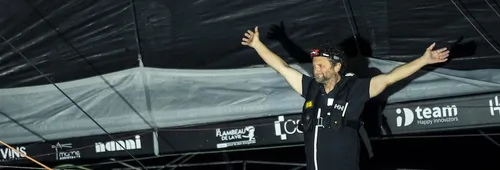
Arnaud Boissières (APRIL Marine - recherche co-partenaires)

Manu Cousin Still in Touch with the High North

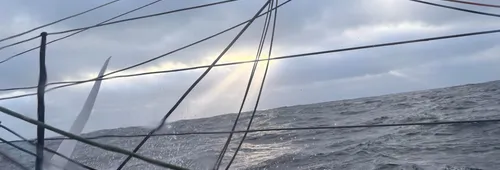
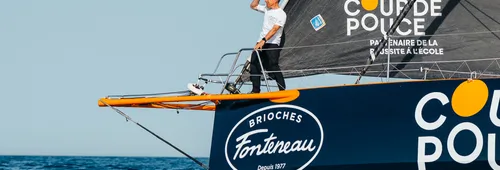
Several hundred miles farther north, Manu Cousin finds himself in a very different environment. While Nico d’Estais and Arnaud Boissières search for every breath of wind capable of carrying them towards Les Sables d’Olonne, the Coup de Pouce skipper continues his long descent towards Ireland under the influence of a slow-moving depression. “My menu basically consists of two options: upwind in strong winds or virtually no wind at all. Neither is particularly good for producing big averages.” The previous night did at least offer a more favourable sequence. Reaching in 35 knots of breeze, his IMOCA once again found conditions more conducive to speed. “This time the boat was really flying. I even had to retract one of the foils because the sea state was quite harsh and I didn’t want to take any unnecessary risks. But at least we were making miles.” Since then, it has been a return to the scheduled programme: Upwind. And more upwind. “I’m back sailing into 25 knots of breeze with gusts expected to reach 35 knots over the next few hours. And it looks as though that will continue for another full day.” After more than nine days at sea, fatigue is naturally beginning to take its toll. “This race is incredibly demanding. There are constant manoeuvres, sail changes and adjustments. You spend your entire time on deck. Mentally and physically, it wears you down.” The objective, however, remains unchanged. “Today my goal is simple: bring the boat home as quickly as possible, but above all bring it home in one piece.” It is a philosophy that perhaps sums up this closing phase of the Vendée Arctique perfectly. The situations are different. The conditions are different. But aboard the three IMOCA yachts still racing, nobody is easing off. Because offshore, as long as there are miles left to sail, there is always something left to gain.


Share this article

Latest news